
Financial technology companies operate at the intersection of innovation, financial services, and an evolving regulatory environment.
From digital payments and embedded finance to lending platforms and financial infrastructure providers, FinTech startups are transforming how businesses and consumers access financial products.
However, building a successful FinTech company requires more than developing innovative technology or attracting customers.
Founders must manage transaction economics, liquidity, financial risks, banking relationships, compliance-related expenses, and increasingly complex reporting requirements.
For venture-backed companies, these responsibilities become particularly important as investors evaluate growth, capital efficiency, financial controls, and the sustainability of the business model.
A FinTech CFO provides the financial leadership needed to connect commercial growth with disciplined financial management.
The role extends beyond accounting and budgeting. It involves understanding how financial products, transaction flows, operational risks, and regulatory obligations influence the company’s financial position.
What Does a FinTech CFO Do?
A FinTech CFO is a senior financial executive responsible for financial planning, capital management, financial reporting, risk-related financial oversight, and strategic decision-making within a financial technology business.
Unlike CFO roles in conventional software companies, FinTech financial leadership may require an understanding of payment processing, lending economics, customer fund flows, financial institution partnerships, and industry-specific reporting requirements.
The scope varies significantly by business model.
A payments company, for example, may focus on transaction volumes, processing costs, settlement timing, and fraud losses.
A lending platform may require detailed analysis of credit performance, funding arrangements, interest income, and liquidity.
An embedded finance provider may need to manage revenue-sharing arrangements, partner obligations, and complex financial reconciliations.
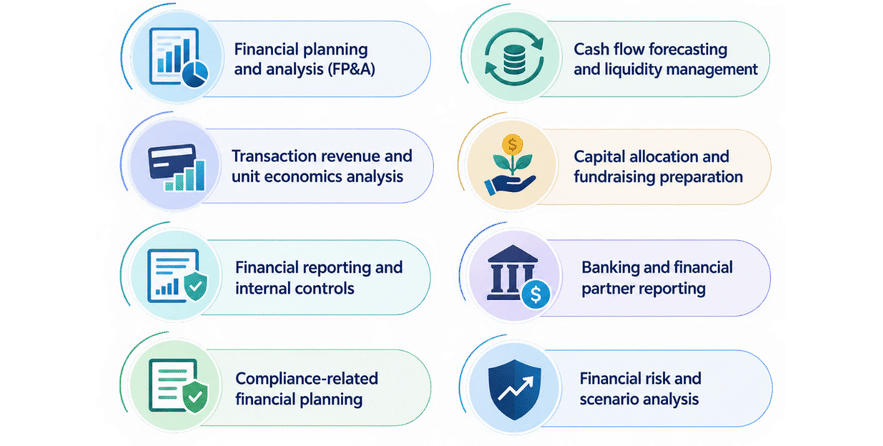
Core responsibilities commonly include:
- Financial planning and analysis (FP&A)
- Cash flow forecasting and liquidity management
- Transaction revenue and unit economics analysis
- Capital allocation and fundraising preparation
- Financial reporting and internal controls
- Banking and financial partner reporting
- Compliance-related financial planning
- Financial risk and scenario analysis
The objective is to provide founders with reliable financial visibility while supporting scalable and responsible growth.
1. Understanding FinTech Revenue Models and Unit Economics
FinTech companies operate under a wide range of revenue models.
Depending on the product, revenue may come from transaction fees, subscriptions, interchange-related arrangements, interest income, servicing fees, platform licensing, or revenue-sharing agreements.
Each model creates different financial planning requirements.
For example, a payment processing company may generate substantial transaction volume while retaining only a relatively small portion of the total processed value as revenue.
A CFO must distinguish between gross transaction volume, recognized revenue, processing expenses, and contribution margin.
Relevant metrics may include:
| Metric | Financial significance |
|---|---|
| Total Payment Volume (TPV) | Measures the value of payments processed |
| Net Revenue | Reflects revenue after applicable deductions under the company’s reporting definitions |
| Take Rate | Evaluates revenue relative to transaction volume |
| Gross Margin | Measures revenue remaining after relevant costs of revenue |
| Contribution Margin | Evaluates profitability after defined variable expenses |
| Customer Acquisition Cost (CAC) | Measures customer acquisition efficiency |
| Customer Lifetime Value (LTV) | Estimates the economic value of customer relationships |
Not every metric applies to every FinTech business.
A qualified CFO should establish consistent definitions that reflect the company’s actual commercial model and applicable accounting policies.
2. Cash Flow Forecasting and Liquidity Management

Liquidity management is one of the most important financial responsibilities in FinTech.
Some financial technology companies manage complex cash flows involving customers, merchants, banking partners, payment networks, or financing providers.
These flows may operate on different settlement schedules and create timing differences between transaction activity and available operating cash.
A CFO should establish cash flow forecasts that distinguish between the company’s own operating funds and amounts held or processed on behalf of customers or partners.
This distinction is particularly important when contractual or regulatory requirements restrict how certain funds may be used.
Forecasting should incorporate expected revenue collections, payroll, technology expenses, settlement obligations, vendor payments, and financing requirements.
The CFO should also evaluate alternative scenarios involving slower transaction growth, settlement delays, higher operating expenses, or changes in funding availability.
For venture-backed FinTech startups, cash runway and burn rate remain important indicators of financial sustainability.
However, operating runway should not be calculated using customer or partner funds that are unavailable for general corporate purposes.
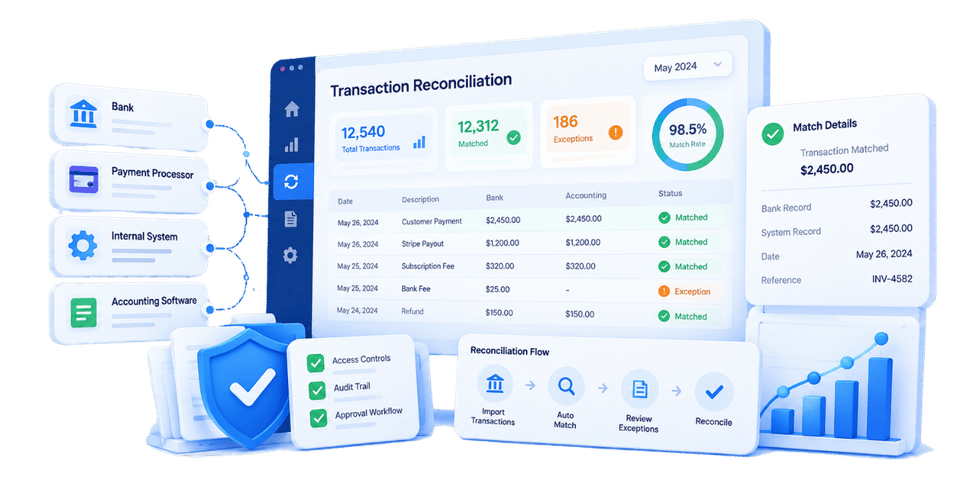
3. Financial Controls and Transaction Reconciliation
FinTech companies often process large volumes of financial transactions.
Even relatively small reconciliation errors can create reporting inaccuracies, operational losses, or difficulties identifying unresolved balances.
A CFO should help establish financial controls appropriate to the company’s transaction flows and risk exposure.
These may include:
- Transaction reconciliation: Compare internal records with payment processors, banks, and other financial partners.
- Settlement monitoring: Track expected and actual settlement activity.
- Approval controls: Establish appropriate authorization procedures for payments and financial commitments.
- Exception reporting: Identify unusual transactions, unresolved differences, and reconciliation breaks.
- Financial documentation: Maintain records supporting accounting entries, balances, and management reporting.
The CFO should coordinate with operations, engineering, risk, and compliance teams to ensure that financial reporting reflects underlying transaction activity.
The goal is to establish reliable financial information and reduce the likelihood that operational errors remain undetected.
4. Banking Partnerships and Financial Institution Relationships
Many FinTech companies depend on relationships with banks, payment processors, or other regulated financial institutions.
These partnerships may support payment processing, deposit-related products, lending arrangements, or other financial services.
A CFO should understand the financial implications of partner agreements, including fee structures, reserve requirements, settlement terms, reporting obligations, and contractual commitments.
Depending on the arrangement, a company may also need to provide financial information to banking partners or demonstrate sufficient liquidity and financial controls.
A CFO can help prepare financial forecasts and reporting materials that support these relationships.
However, banking regulations, licensing obligations, and legal interpretations require input from qualified compliance and legal professionals.
The CFO’s role is to coordinate the financial aspects of these requirements and ensure that relevant obligations are reflected in business planning.
5. Compliance Costs and Regulatory Financial Planning
The regulatory environment for FinTech companies depends on their activities, products, customers, and operating jurisdictions.
Some companies may be subject to requirements involving money transmission, lending, consumer protection, anti-money laundering, or other financial services regulations.
Other businesses primarily provide technology services to regulated financial institutions and may have different responsibilities.
A FinTech CFO should work with legal and compliance specialists to understand the financial implications of applicable requirements.
These may include:
- Licensing and registration expenses
- Compliance personnel and external advisory costs
- Monitoring and reporting technology
- Independent assessments and audits
- Insurance and contractual requirements
- Regulatory examinations or remediation costs
The CFO should incorporate expected expenditures into operating budgets and cash flow forecasts.
Financial planning should also consider the potential costs of expanding into additional U.S. states or introducing new financial products.
 6. Managing Fraud Losses and Financial Risk
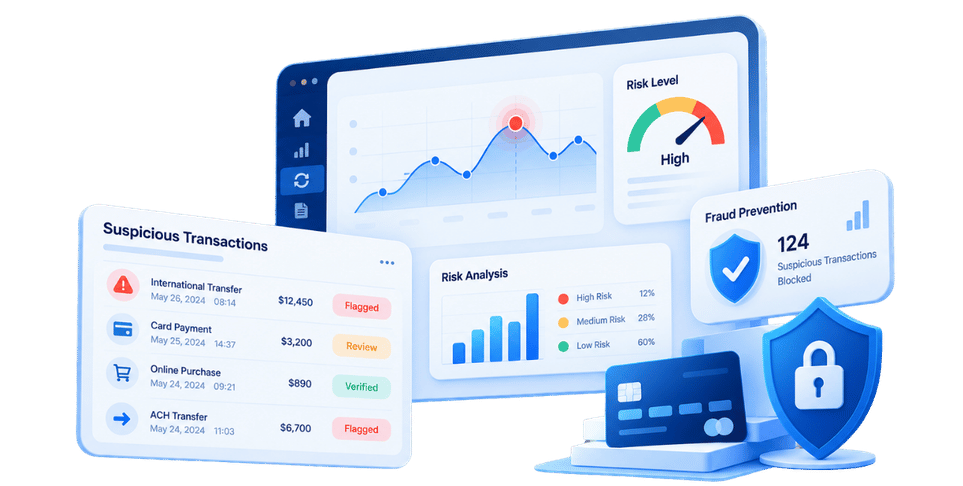
Fraud, payment disputes, credit losses, and operational incidents can have significant financial implications for FinTech companies.
The relevant exposures depend on the company’s business model.
A payment platform may face chargebacks, disputed transactions, and fraud-related losses.
A lending company may need to analyze borrower defaults, expected credit losses, and funding risks.
A CFO should collaborate with risk management, operations, and compliance teams to understand these exposures.
Financial planning may include historical loss analysis, scenario modeling, reserve or allowance considerations, and assessment of contractual risk-sharing arrangements.
For companies with financial assets subject to expected credit loss accounting, ASC 326 may be relevant, depending on the nature of the assets and applicable accounting requirements.
The CFO should coordinate with qualified accounting specialists when technical accounting judgments are necessary.
The objective is to ensure that material financial risks are appropriately measured, reported, and incorporated into management decisions.
7. Fundraising and Investor Reporting for FinTech Startups
Venture capital investors evaluating FinTech startups often consider both growth performance and financial risk.
In addition to revenue growth and customer acquisition, investors may examine transaction economics, gross margin, liquidity, capital efficiency, and exposure to financial losses.
A CFO should establish reporting processes that provide a reliable view of these factors.
A typical investor reporting package may include:
- Revenue and transaction volume trends
- Gross margin and contribution margin
- Customer acquisition and retention metrics
- Operating cash flow and runway
- Budget-to-actual comparisons
- Financial risk indicators
- Updated financial forecasts
- Significant partner and funding commitments
For lending businesses, additional reporting may include loan portfolio performance, delinquency trends, funding costs, and credit loss metrics.
For payments businesses, reporting may focus on transaction volume, take rate, processing costs, and settlement performance.
The CFO should ensure that reporting reflects the company’s actual operating model rather than applying generic startup metrics.
8. Building Scalable Financial Infrastructure
As FinTech companies grow, their financial systems must support increasing transaction volumes, additional products, and more complex reporting requirements.
A CFO should evaluate whether existing accounting systems, reconciliation processes, financial data integrations, and internal controls can support the company’s expansion.
Important priorities may include automated transaction reconciliation, reliable financial data pipelines, standardized closing procedures, and stronger expense controls.
The CFO should also establish processes for monitoring cash balances, settlement obligations, partner accounts, and financial performance.
For U.S. companies, accounting considerations may include revenue recognition under ASC 606, financial instruments, credit losses, and the classification of customer-related balances.
The applicable guidance depends on the company’s specific products, contracts, and transactions.
Technical accounting conclusions should be developed with appropriately qualified professionals.
Fractional CFO vs. Full-Time CFO for FinTech Startups
Not every FinTech startup requires a permanent, full-time CFO.
Early-stage and growing companies may benefit from a fractional CFO who provides strategic financial leadership through a flexible engagement.
| Consideration | Fractional FinTech CFO | Full-Time FinTech CFO |
|---|---|---|
| Engagement | Flexible, part-time | Permanent executive |
| Cost structure | Retainer or agreed scope | Salary, benefits, and potentially equity |
| Financial planning | Defined by engagement scope | Continuous executive oversight |
| Liquidity management | Can be included in scope | Ongoing internal responsibility |
| Investor reporting | Can be managed or supported | Continuous oversight |
| Suitable for | Startups with manageable complexity requiring senior expertise | Companies with extensive ongoing financial and regulatory complexity |
A fractional CFO may be appropriate for a FinTech startup preparing for fundraising, improving financial forecasting, or strengthening its reporting processes.
However, companies with significant customer fund flows, complex lending operations, substantial regulatory obligations, or continuous treasury requirements may need dedicated financial leadership.
The appropriate model should reflect the company’s risk profile and operating requirements.
How to Choose the Right CFO for a FinTech Company
Founders should evaluate CFO candidates based on their understanding of the company’s business model and financial risks.
Five questions can help guide the selection process:
- Have you worked with FinTech or financial services businesses? Relevant experience can help the CFO understand transaction economics and industry-specific financial challenges.
- How would you manage liquidity and cash flow forecasting? The response should address operating cash, settlement timing, and restricted funds where applicable.
- What financial controls would you prioritize? Strong candidates should understand reconciliation, transaction monitoring, and reporting accuracy.
- How would you evaluate our unit economics? The CFO should tailor financial analysis to the company’s revenue model.
- How would you prepare financial reporting for investors and financial partners? The response should demonstrate an understanding of reporting consistency, financial risks, and stakeholder expectations.
The most effective CFO should combine strategic financial expertise with the ability to collaborate with engineering, operations, compliance, and executive leadership.
How ERB Proximo Supports FinTech Startups
ERB Proximo provides outsourced CFO and financial management services for startups and growing companies operating in the United States.
For FinTech startups, effective financial management requires connecting financial planning, accounting, cash flow forecasting, and performance reporting within a coordinated framework.
ERB Proximo’s services encompass CFO-level oversight, financial planning and analysis, accounting, controllership, and financial reporting.
These capabilities can help founders strengthen financial visibility, improve management reporting, and support strategic capital allocation decisions.
Where specialized regulatory, legal, or technical accounting expertise is required, financial leadership should work alongside appropriately qualified advisers.
Frequently Asked Questions
1. What does a FinTech CFO do?
A FinTech CFO oversees financial planning, cash flow forecasting, capital allocation, financial reporting, and strategic financial decision-making. Depending on the business model, the role may also involve transaction economics, liquidity management, banking partnerships, and financial risk analysis.
2. Why do FinTech startups need specialized CFO expertise?
FinTech companies may manage complex transaction flows, settlement arrangements, financial partner relationships, and industry-specific financial risks. Specialized CFO expertise helps management understand how these factors affect profitability, liquidity, and growth.
3. What financial metrics should a FinTech CFO track?
Relevant metrics may include revenue growth, transaction volume, take rate, gross margin, contribution margin, CAC, LTV, cash runway, and burn rate. Lending and payments businesses may require additional metrics tailored to their operations.
4. Can a fractional CFO support a FinTech startup?
Yes. A fractional CFO can provide financial planning, forecasting, reporting, and strategic guidance through a flexible engagement. Suitability depends on the company’s transaction complexity, risk exposure, and required level of financial oversight.
5. How does a FinTech CFO support regulatory compliance?
A CFO helps budget for compliance-related expenses, coordinate financial information, and incorporate relevant obligations into financial planning. Legal and compliance professionals remain responsible for specialized regulatory analysis and compliance activities.
6. When should a FinTech startup hire a CFO?
A FinTech startup should consider CFO-level support when transaction volumes increase, financial reporting becomes more complex, banking partnerships expand, fundraising approaches, or management requires stronger liquidity and risk-related financial oversight.
Financial Leadership for Sustainable FinTech Growth
FinTech startups must balance innovation, customer growth, financial performance, and operational risk.
Transaction economics, liquidity requirements, banking relationships, and compliance-related expenses create financial challenges that require disciplined planning.
An experienced FinTech CFO helps founders understand these relationships, strengthen financial controls, and make informed capital allocation decisions.
Whether delivered through a fractional or full-time engagement, effective CFO leadership can support financial visibility, investor readiness, and scalable business operations.
Looking for CFO-level financial support for your FinTech startup?
Explore how ERB Proximo’s outsourced CFO and financial management services can support financial planning, reporting, and strategic decision-making as your company grows.